There is a moment in every infrastructure cycle when a new standard arrives and solves exactly the problem it was designed to solve. Model Context Protocol (MCP) is that moment for enterprise AI.
Before MCP, connecting an AI agent to enterprise systems meant bespoke integration for every data source, every API, every tool — custom connectors, fragile middleware, and engineering cycles spent not on intelligence but on plumbing. MCP standardized that away, giving agents a universal interface to discover, connect to, and operate across every tool and data source an enterprise runs on.
The problem MCP solved was connectivity. The problem it revealed, and the one now sitting in front of every enterprise AI leader — is governance.
MCP has been described, accurately, as the USB-C of enterprise AI. A universal connector that lets any compliant model talk to any compliant system, without the negotiation overhead that previously made integration into the bottleneck.
The adoption velocity reflects this. MCP went from an open standard to the default integration layer for enterprise AI in under eighteen months. OpenAI adopted it. Google built native support into Gemini. Microsoft embedded it across Copilot. The Agentic AI Foundation, now a Linux Foundation directed fund, took stewardship of the protocol in 2025. By 2026, an AI agent that does not speak MCP is an agent with limited reach.
But the USB-C analogy contains an important caveat that gets lost in the excitement. USB-C is a connectivity standard. It does not tell you what a connected device is allowed to do. It does not enforce access controls. It does not maintain an audit trail of what moved between the device and the system. It does not know whether the connection was authorized by someone with the authority to authorize it.
Neither, in its current form, does MCP.
Forrester has noted that MCP is frequently mistaken for a governance layer when it functions more like a transport or interoperability mechanism. It is the wire. It is not the policy engine.
Before MCP, the integration layer was an accidental security boundary. If nobody had connected the agent to a system, the agent could not reach it. MCP removes that boundary by design. The constraints that previously lived in the integration layer no longer exist, and nothing has yet replaced them.
Four governance gaps open up the moment MCP is deployed at enterprise scale.
AI agent access control without per-user authorization. When MCP connects an agent to a data source through a service account, the agent inherits that account’s full reach regardless of who is asking or what they are actually permitted to do. Zero-trust principles do not survive that architecture.
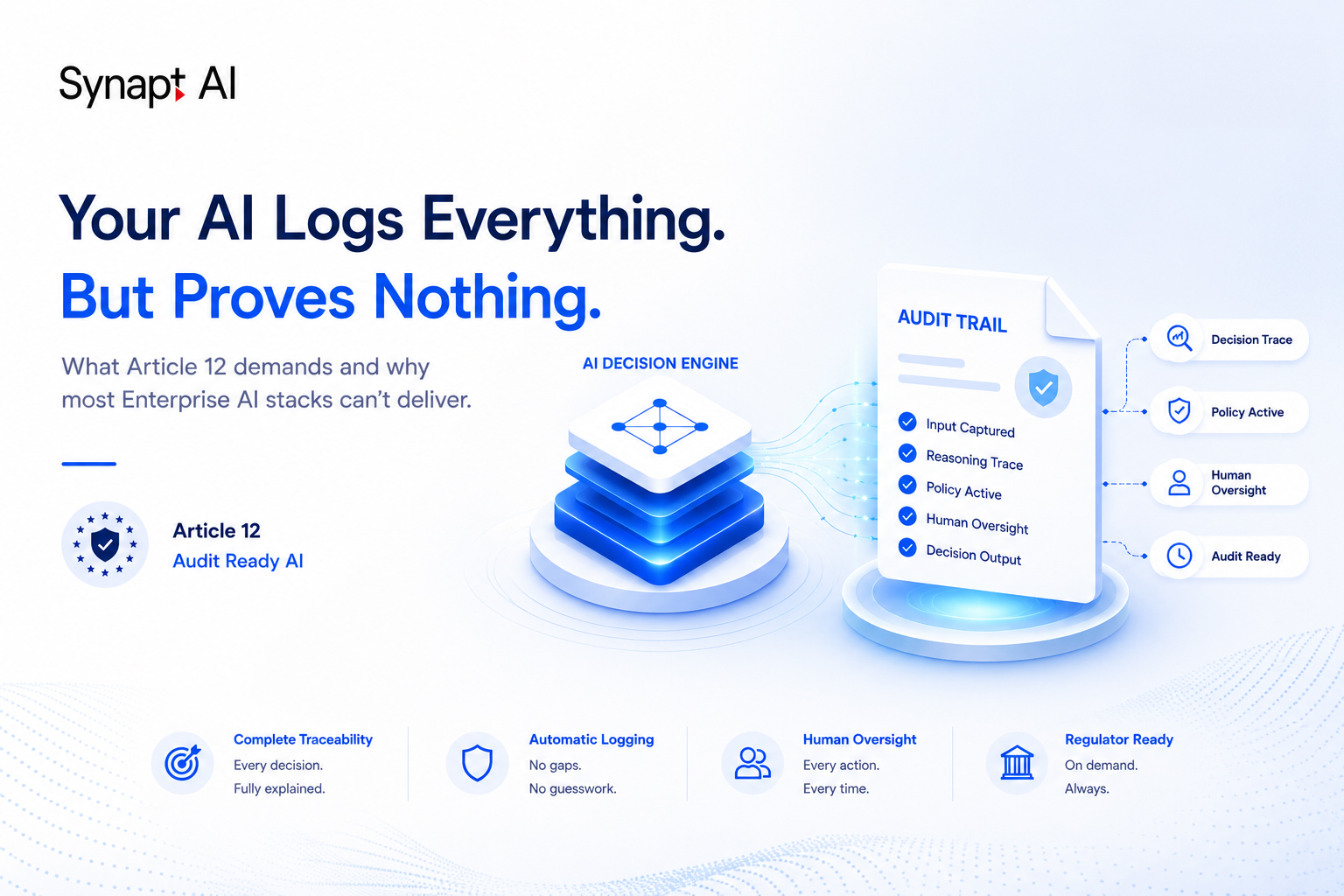
Audit trails that stop at the connection layer. Default MCP logging captures the action but not the reasoning, the policy, or the authority behind it. The record tells you what the agent did. It cannot tell you whether it was authorized to do it.
Shadow MCP servers. MCP integrations require nothing more than protocol access and system credentials to create, which means they are already proliferating across most enterprises without appearing in any central inventory. The governance surface grows with every new server. The governance rarely does.
Prompt injection through trusted data sources. MCP passes enterprise content directly to the model as context. If that content has been manipulated, it becomes an instruction vector — the model processes it as data while the agent acts on it as a command. Trusted sources do not mean safe inputs, and this is where a new class of enterprise AI security incidents is forming.
There is a logic to MCP adoption that deserves scrutiny. Agents need to reach enterprise systems to be useful. MCP makes that reach easy and standardized. Therefore, adopt it at pace. The flaw appears in what that logic skips entirely: what the agent should do once it has reach.
Harvard Business Review observed that when every enterprise has access to the same models and the same integration protocol, the only remaining differentiator is organizational context — the decision logic, the exception rules, the authority structures that determine who can act on what. That context is not in the model. It is not in MCP. It has to be built.
Skipping that step has a predictable outcome. Agents that can reach everything and understand nothing about what they are permitted to do. Policy documents that govern human behavior but not agent behavior. Actions taken through authorized connections with no structural grounding in what was actually permitted.
The connectivity trap is the belief that connection equals understanding. That an agent which can query a system therefore knows how its data should be used, under which conditions, and with which constraints. It does not.
Every serious conversation about MCP governance ends in the same place. CIS calls it governing the protocol layer. Oracle calls it an Evidence and Control Layer. SAP calls it the foundational substrate. The terminology differs. The structural requirement does not: something governed, traceable, and procedurally grounded has to exist beneath MCP before agents operate at scale.
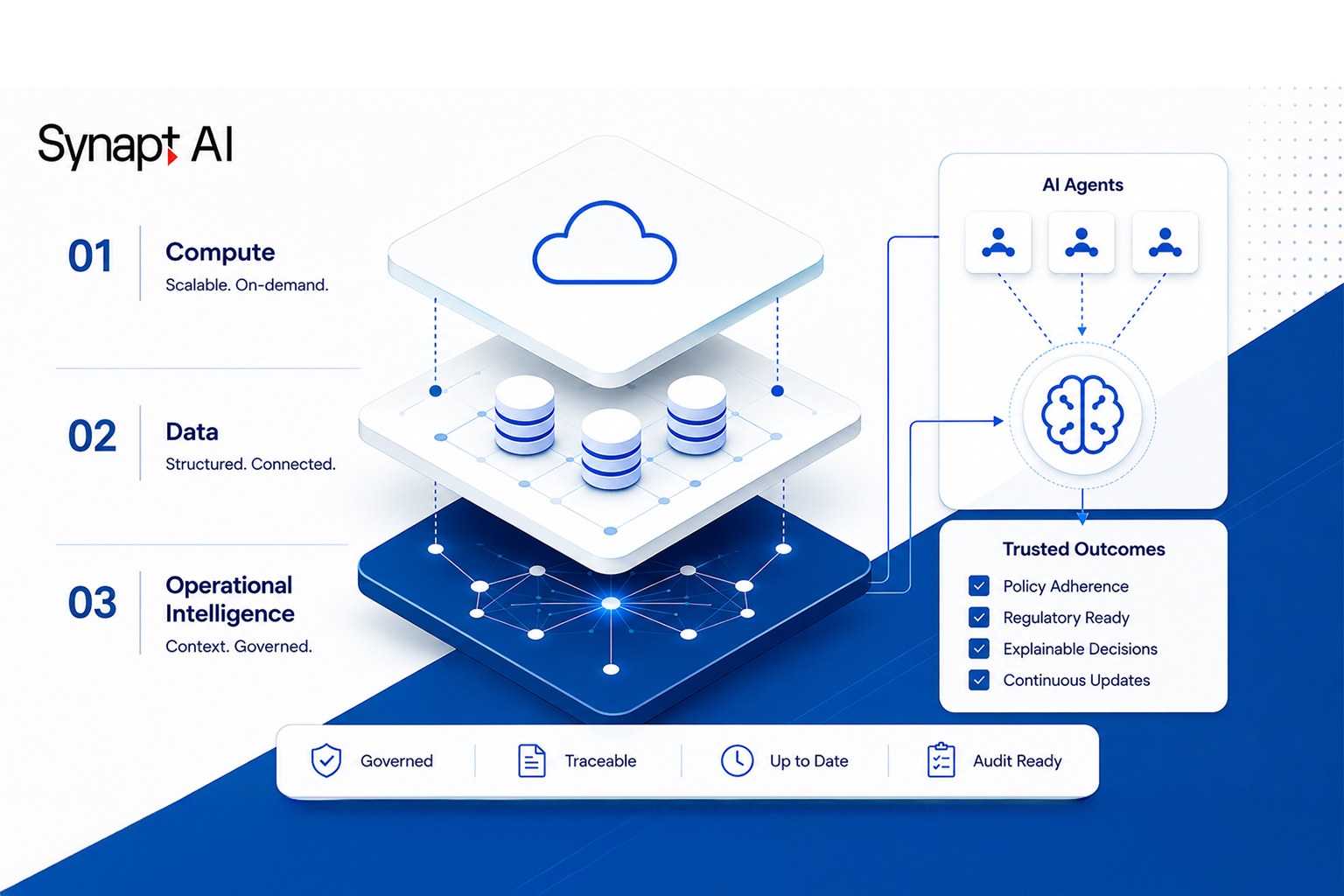
The convergence is not accidental. MCP gives agents reach, the AI substrate gives them safe boundaries to operate within. That substrate requires three things — integrated and encoded, not documented:
Knowledge with provenance. Not just retrievable data, but data that carries a confidence level, a freshness indicator, and a traceable source. The difference between an agent that knows it is reasoning from outdated policy and one that assumes currency it cannot verify is the difference between a reliable decision and a stale one.
Procedures as executable logic. Approval thresholds, escalation conditions, authority matrices, compliance requirements — encoded not as documents but as constraints the agent must satisfy before acting. When the procedure requires human approval, the agent stops. Not because its system prompt says so. Because the architecture does.
A complete and traceable chain of accountability. Every agent action traceable from output back through the reasoning, the procedure followed, the data used, and the authority under which it acted. Not a log that says an action occurred. A record that makes every action defensible — to an auditor, a regulator, or a board.
The protocol is open. The models are commoditized. The only remaining differentiator is what neither provides — the decision logic, institutional knowledge, and authority structures that reflect how a specific enterprise actually operates. That organizational context does not come with MCP. It must be built.
The enterprises building a durable advantage in 2026 are the ones that asked, before they adopted MCP, what their agents would actually reason within. They are building that context layer as infrastructure — not as a project, not as a pilot, but as the foundation every subsequent deployment draws from.
The race is not to connectivity. The race is to governed intelligence.
MCP gets you to the starting line. The AI substrate is how you run the race.